- Real Estate
- Jul 7, 2026
Las Terrenas Properties for Sale: A 2026 Buyer's Guide
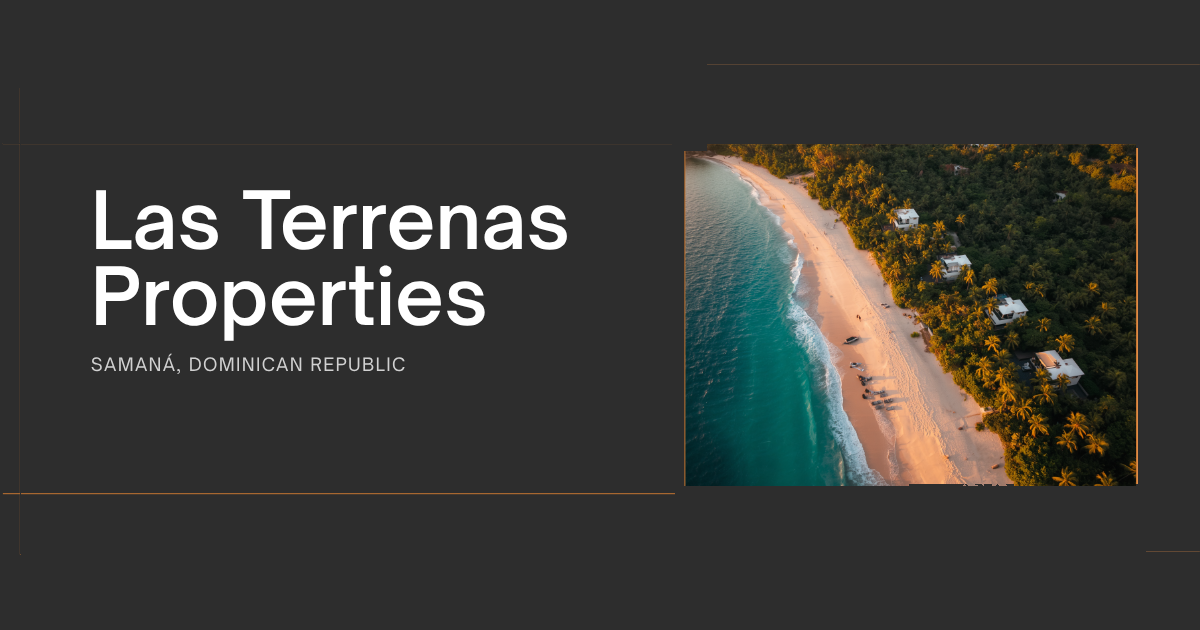
Most people who start searching for Las Terrenas properties for sale are chasing a specific feeling: a walkable beach town where you can have coffee in French, dinner in Italian, and your feet in the Caribbean by mid-afternoon. What surprises many of them is that the same qualities that make Las Terrenas a wonderful place to spend time also make it one of the more balanced investment markets in the Dominican Republic.
On the north side of the Samaná Peninsula, Las Terrenas has grown from a quiet fishing village into an international beach town with a distinctly European character. That community is not just charming, it is what gives the local rental market demand across much of the year rather than in a few peak weeks. For a buyer weighing lifestyle against returns, that combination is the whole appeal.
This guide covers what you can actually buy in Las Terrenas, what it tends to cost, how the rental market behaves, and what to check before you commit.
Why Las Terrenas stands apart
Las Terrenas has one of the largest and most established European expat communities on this coast, with a strong French, Italian, and German presence. That shapes everything about the town, from the cafés and restaurants to the year-round rhythm of visitors and residents. Unlike markets that live and die by high-season tourism, Las Terrenas has a resident international population that keeps restaurants, services, and rentals active outside the peak months.
For an investor, that translates into more consistent rental demand and a deeper pool of potential buyers when it is time to sell. It also means the town has real infrastructure, schools, medical services, supermarkets, and a growing dining scene, which matters for both long-term tenants and owners who want to spend meaningful time here. This is a place people live, not just visit, and that changes the investment math in a good way.
What you can buy, and what it costs
Las Terrenas offers a genuinely wide range of property, which is part of why it suits so many different buyers. At the accessible end, studios and one-bedroom condos generally start somewhere around the mid-to-high five figures and climb from there depending on location and finish. Well-located two- and three-bedroom villas commonly fall in a range from roughly the low six figures up toward six hundred thousand dollars, while beachfront and luxury estates run well beyond that.
Median transaction and asking prices for condos have been sitting in the high two-hundred-thousands, which gives a useful sense of the middle of the market. On a per-square-meter basis, condos and beachfront command a premium over inland stock, and buildable land sits lower, appealing to buyers who want to develop. These are broad ranges rather than fixed prices, and the specific number depends heavily on proximity to the water, the quality of the build, and the community. The most reliable way to understand current pricing is to look at live inventory, which you can do through our curated Las Terrenas listings.
Rental income potential
Las Terrenas is one of the easier Dominican markets to rent in, thanks to steady demand from tourists, expats, and a growing number of remote workers. Well-managed properties in prime, walkable locations can achieve net yields that land in a healthy single-digit range, with the strongest performers at the upper end. It is worth being clear that these are net figures after costs, and that short-term rental returns here tend to be steady rather than spectacular, which suits investors who value reliability.
Location within the town drives a large part of the return. Properties within walking distance of the beach and the main restaurant strip command meaningfully higher nightly rates than comparable units set further inland, often by a wide margin. That walkability premium is one of the most important factors in Las Terrenas, and it is why two properties with similar square footage can produce very different income. As always, a credible projection should account for management, cleaning, platform fees, vacancy, and seasonality rather than quoting a gross headline.
The beaches and neighborhoods that matter
Las Terrenas is really a collection of beaches, each with its own character. Playa Las Ballenas and the central beaches put you closest to the town's cafés and nightlife, which supports strong short-term rental demand. Playa Bonita, a short distance away, is quieter and more upscale, favored by buyers who want a calmer setting without losing access to town. Playa Cosón offers a long, dramatic stretch of sand and a more resort-oriented feel, while areas toward El Portillo carry longer-term development potential.
Choosing among them is really a question of what you want the property to do. A unit steps from the central beach will rent more nights; a villa in Playa Bonita or Cosón may offer a better personal lifestyle and appeal to a specific buyer at resale. There is no single best beach, only the one that fits your goal, which is a theme worth keeping in mind across the whole Dominican market, as we discuss in our overview of the best places to invest in Dominican Republic real estate.
A market that is maturing, not peaking
A few signals suggest Las Terrenas is still early in its growth rather than fully priced. Infrastructure has improved, the wider Samaná region has its own international airport at El Catey within reach, and international hospitality has moved in, with a Marriott Autograph Collection resort that opened on the coast in late 2025 and is now operating. When global hotel brands commit to a market, it usually reflects confidence in the medium-term trajectory.
Land in the area has appreciated at a healthy pace as the peninsula develops, though appreciation is never guaranteed and varies by exact location and timing. The reasonable read is that Las Terrenas combines an established, livable town with continued room to grow, which is a rarer profile than either a brand-new development or a fully saturated resort zone.
Buying process, costs, and foreign ownership
Foreign buyers purchase in Las Terrenas with the same ownership rights as Dominican citizens, in their own name, with no residency requirement. The process runs through property selection, a written offer and deposit, a due diligence period, and closing. During due diligence, your attorney should confirm clean title, verify the seller's authority to sell, check that taxes and condominium documents are current, and review any rental restrictions.
Closing costs generally run in the range of a few percent of the purchase price, including the title transfer tax, legal fees, and registration. Some qualifying tourism properties can also benefit from the CONFOTUR incentive, which may exempt them from certain taxes for a period, though this depends on the specific project and should be confirmed rather than assumed. Because the process differs from a North American transaction in meaningful ways, local legal and real estate guidance is not an optional extra here. If you are comparing markets, our guide to Punta Cana investment properties is a useful companion.
Who Las Terrenas suits
Las Terrenas is at its best for buyers who want a property that works on two levels: a genuinely enjoyable place to spend time and an asset that earns through much of the year. It tends to appeal to lifestyle-driven investors, second-home buyers, and those drawn to an international community rather than a purely resort environment. Buyers whose only priority is maximum short-term rental yield with fully hands-off management sometimes lean toward Punta Cana, while those who value character, walkability, and year-round life gravitate here.
If that balance is what you are after, Las Terrenas is one of the most compelling places to buy in the country. The best next step is to look at current inventory against your budget and goals, and to talk through which beach and property type fit what you want. Contact Samana Real Estate and we will help you find the right property in Las Terrenas.
Recent Posts
Blogs not found.
Categories

You may also like